Published January 2, 2026 05:00AM
"By Far the Most Difficult Year." These are the Best FKTs of 2025.
Numerous records went down on many of the world's most iconic routes last year. Voters painstakingly selected the few fastest known times that will be forever immortalized.
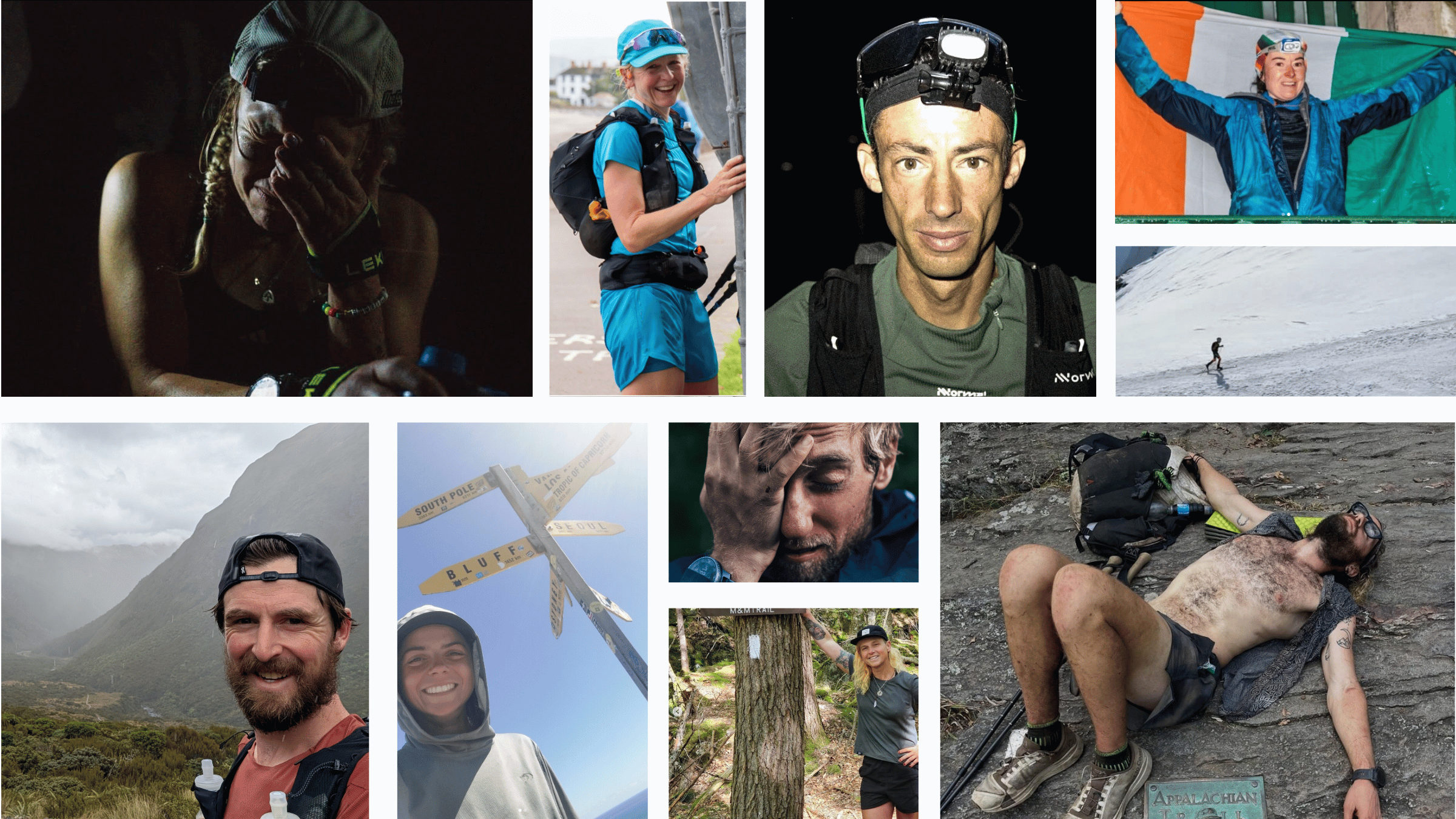
(Photo: Abby Levene)
The regional editors of Fastest Known Time, the official arbiter of FKTs, have spoken. The consensus: record-setters from around the globe made selecting the best FKTs of year harder than ever.
In 2025, 2,355 records were verified by Fastest Known Time, which is owned by Outside Inc., the parent company of Outside Run. And of those, FKTs from 26 women and 28 men were nominated for FKT of the Year.
For the first time, the majority of the top five men and women came from outside the U.S.—a reflection of the booming popularity of embarking on these types of solo or team-oriented efforts, often through landscapes far more wild, unique, or intimate than what you’ll find in a race.
“There were so many iconic FKTs all over the world, and it was very difficult to choose,” one regional editor wrote on their submission form. “All nominations were serious contenders.”
ADVERTISEMENT
Women from New Zealand to the U.K. wowed voters this year. But for the second year in a row, one performance rose head-and-shoulders above the rest. Tara Dower backed up her historic record on the Appalachian Trail from 2024 with the overall record on the hotly-contested Long Trail this summer. “It’s a mind-blowing record beating all times on one of the most competitive, premier routes,” a voter wrote.
Meanwhile, the men’s FKT of the Year was a convivially-fought contest for all top five spots. Ultimately, the indomitable grit of Jeff Garmire, who faced one seemingly insurmountable obstacle over the next—on the most prestigious long trail in the world—could not be topped.
“Such a stout field, totally comparing apples to oranges,” another voter wrote. “But it’s hard to top the magnitude of Jeff Garmire’s effort.”
These are the top five women’s and men’s FKTs of the year. And for a full debrief with Dower and Garmire winners, check out the FKT Podcast hosted by numerous record-setter Heather Anderson. Their far-reaching conversion spans everything from transitioning back to “real” life after these types of efforts, to why not being afraid to fail is a superpower.
#5 FKT of the Year
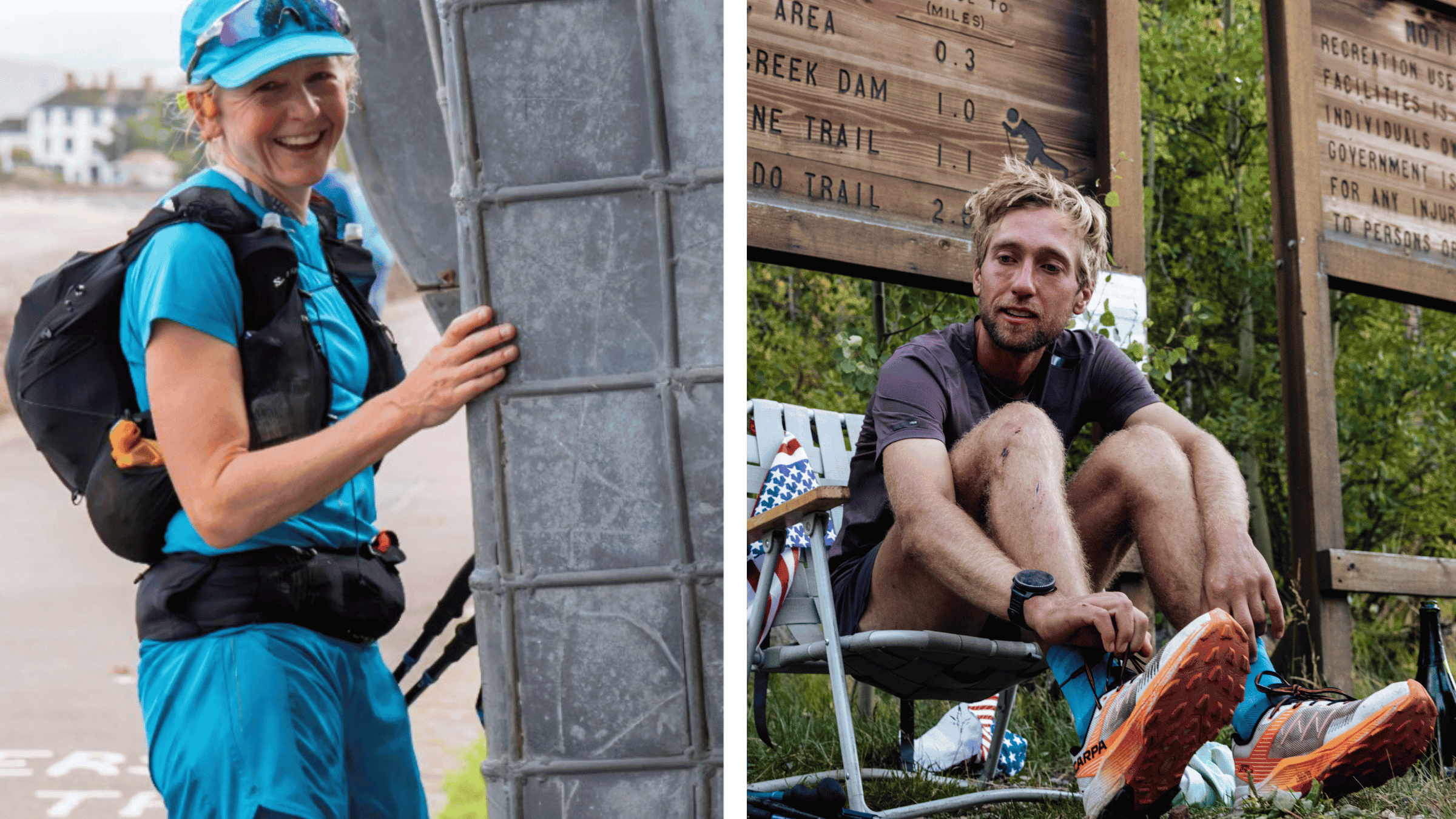
Women: Lucy Gossage, South West Coast Path
What can’t this oncologist, 14-time Ironman champion, and Spine Race winner do? Lucy Gossage demolished the overall self-supported record on the U.K.’s longest footpath this fall, completing the 630-mile route in 11 days, 9 hours, and 6 minutes. That’s over 55 miles a day, carrying all of her own supplies along the way. “This was one of the most incredible, challenging and life affirming experiences of my life,” she said.
Men: David Hedges, Nolan’s 14
Maybe revenge isn’t a dish best served cold. Just two months after ultrarunning legend François D’Haene took down David Hedges’s 2023 mark on this mythic Colorado route, Hedges returned to take it right back. What’s most notable about his accomplishment is the style in which he did it—with a ragtag support crew, little fanfare, and years of hard work honing the best line on this largely off-trail quest up and over 14 14,000-foot peaks. “It’s the hardest thing I’ve ever done, by far,” he told Outside Run after battling through winter conditions to shave 10 minutes off the record.
#4 FKT of the Year
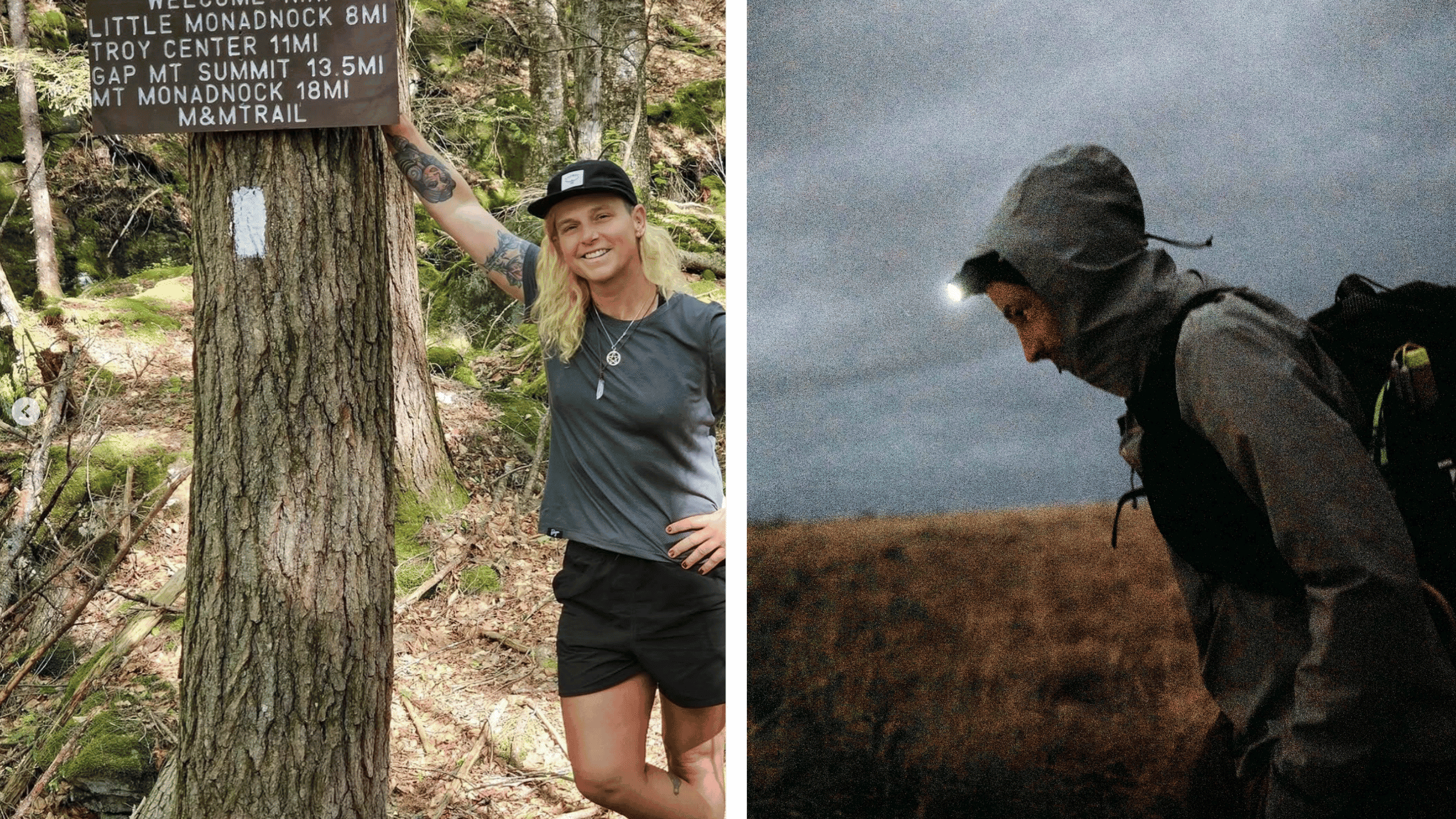
Women: Lyla Harrod: Appalachian Trail
Lyla Harrod battled through knee and quad issues early on in the north before finding her groove on the 2,189-mile Appalachian Trail. Despite aching feet over the final few weeks and the compounding effects of sleep deprivation (she estimates she slept between three-and-half and five hours a night), Harrod, traveling self-supported, reached the summit of Springer Mountain in 52 days, 18 hours, and 37 minutes—a day and a half faster than Heather Anderson’s legendary 2015 mark. “I’m the first known trans person to hold an FKT on the Appalachian Trail, or any other Premier Route as far as I know,” Harrod said. My effort represents my commitment to not backing down in the face of political and cultural oppression, my commitment to visibility, and to showing people that trans athletes deserve to compete with their cisgender peers.”
Men: Kilian Jornet, Norman’s 13
In September, Kilian Jornet destroyed the record on this linkup of the 13 14,000-foot peaks in the Sierra Nevada, shaving nearly a day off the previous mark to finish in two days, eight hours, and 11 minutes. But what’s most impressive about this FKT is that it was set towards the end of Jornet’s monumental quest to summit the 14,000-foot peaks in the contiguous U.S. and link them by bike—in one month-long push. (Since FKT of the Year voting, Jornet has submitted the full route to Fastest Known Time, and the effort in its entirety now stands as an official FKT.) “Time stretched and compressed—at once two years and a single day,” Jornet said of the project. “It was intense and overflowing with experiences and landscapes, enough to scramble any sense of duration.”
#3 FKT of the Year
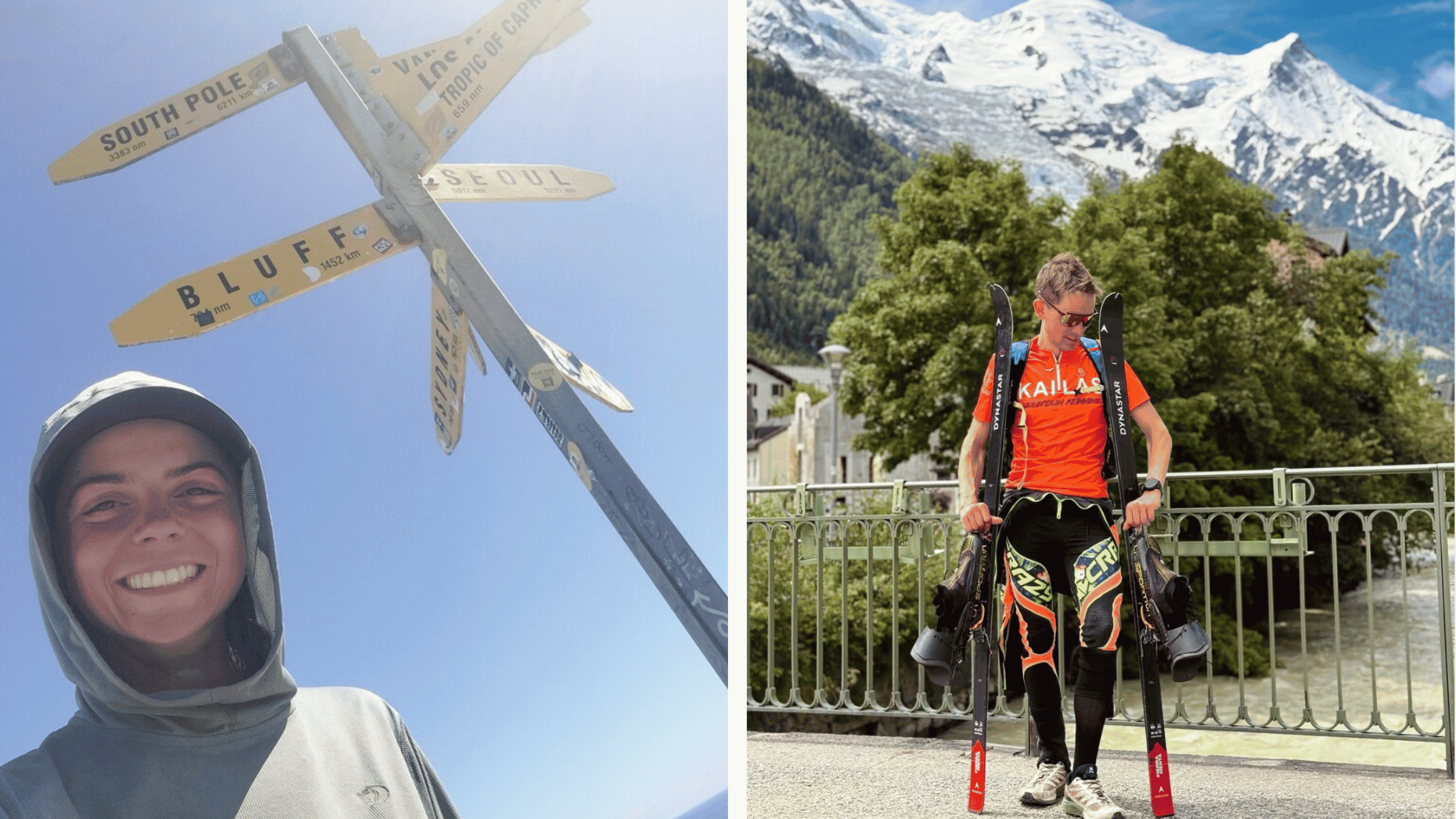
Women: Paulina Zack, Te Araroa
It was quite the austral summer for the Te Araroa, New Zealand’s premiere long trail that spans the length of the two islands. Traveling northbound in a self-supported style, Germany’s Paula Zäck tackled the 1,888-mile route in 54 days, 9 hours, and 48 minutes, taking over three days off of the overall women’s FKT, which had been set in a supported style. While the steep climbs on the South Island were objectively harder, she said, she actually found the North Island more challenging—all of the road walking was hard on this seasoned thru-hiker’s feet. “I’ve learned a lot about myself,” Zäck said. “The trail taught me where my limits lie (which I don’t think I have reached yet), but also how strong I am—both physically and mentally.”
Men: William Boffelli, Mont Blanc
Just seven days after France’s Benjamin Vedrines set a new record on Mont Blanc, nature’s crown jewel of Europe, Italy’s William Boffelli blew his time out of the water. The highly accomplished sky runner and ski mountaineer departed from the church in downtown Chamonix, France, in his neon-accented full-body ski suit with his helmet on and boots and skis strapped to his back, ran, skied, and boot-packed (on less than ideal conditions) over 12,000 vertical feet to the 15,774-foot summit, and repeated the process in reverse to return to the church in four hours, 43 minutes, and 24 seconds—11 minutes under the FKT. While the optics of an elite athlete running up and down a technical trail in full ski garb is rather comical, this feat is anything but. Boffelli was also nearly five minutes under Kilian Jornet’s FKT, set entirely on foot.
#2 FKT of the Year
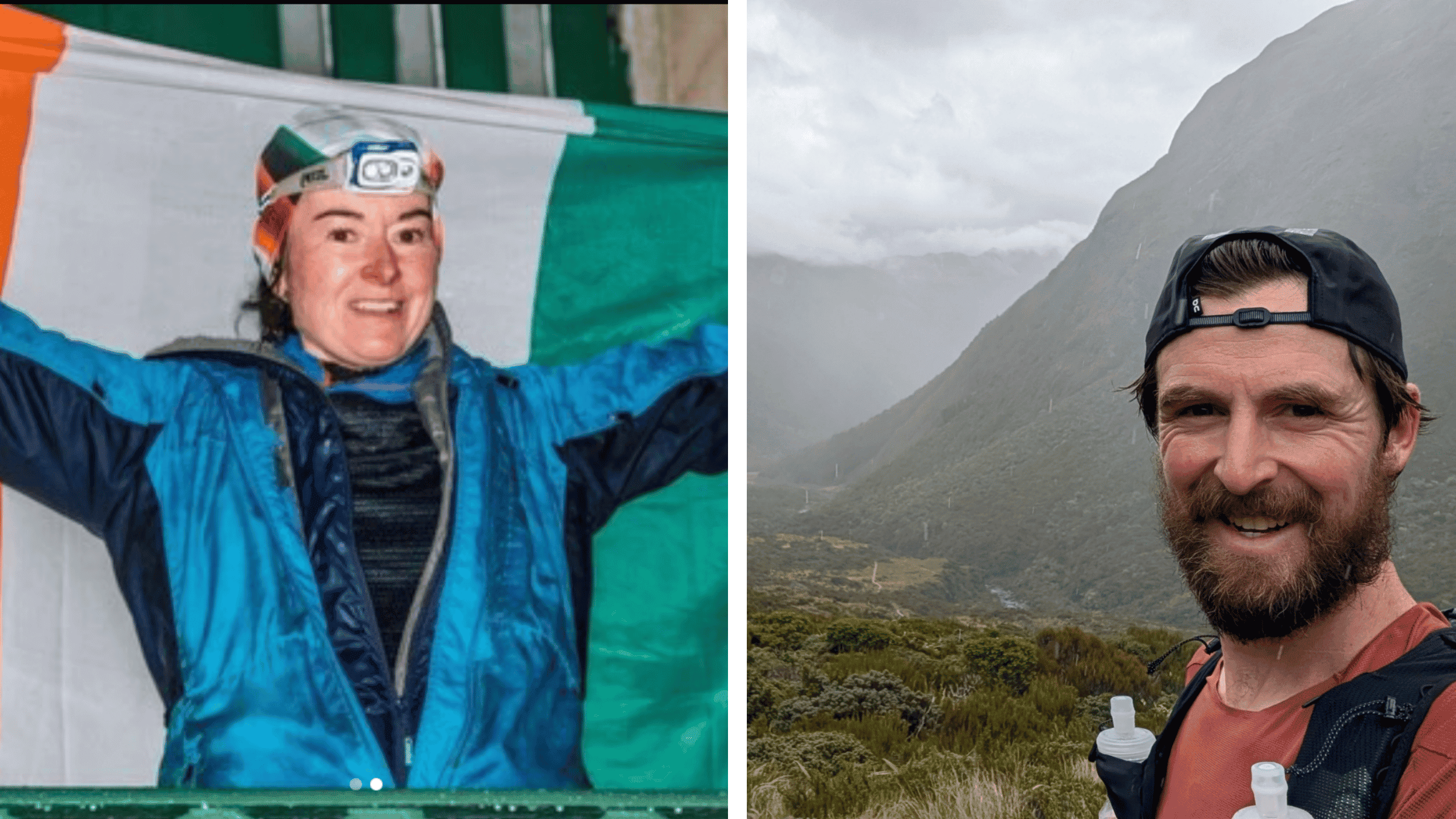
Women: Carol Morgan, Wainwrights 214
While most of us recovered from our Christmas coma on Boxing Day last year, Ireland’s Carol Morgan set off from Moot Hall in Keswick in the dark and battled freezing temperatures, rain, and fierce wind en route to ticking off the 214 summits in the U.K.’s Lakes District. She covered the 320 miles and 118,000 feet of climbing in eight days, one hour, and 51 minutes, becoming just the second person (and first woman) to complete the Wainwrights 214 in winter. She also took about five hours off the overall winter FKT. “Not too bad for an old woman,” Morgan, then 51, said at the end.
Men: Karel Sabbe, Te Araroa
We told you it was a busy year for the Te Araroa. Last January, Karel Sabbe of Appalachian Trail and Pacific Crest Trail FKT fame took on New Zealand’s longest and most iconic route. Adopting what he termed a “Hobbit-like” eating schedule, the Belgian dentist contended with insane mud, sand, water crossings, and wild dog attacks en route to absolutely obliterating the FKT by nearly 18 days. Sabbe reached Sterling Point at the bottom of the South Island that marks the southern terminus in 31 days, 19 hours, and 40 minutes—an average of 59.6 miles per day—reaffirming why he’s one of the greatest athletes ever to tackle the world’s premier long trails. “When you are running in stunning, beautiful scenery, it doesn’t matter if you suffer, if you’re having a hard time,” Sabbe said. “It’s a privilege to be out there.”
FKT of the Year
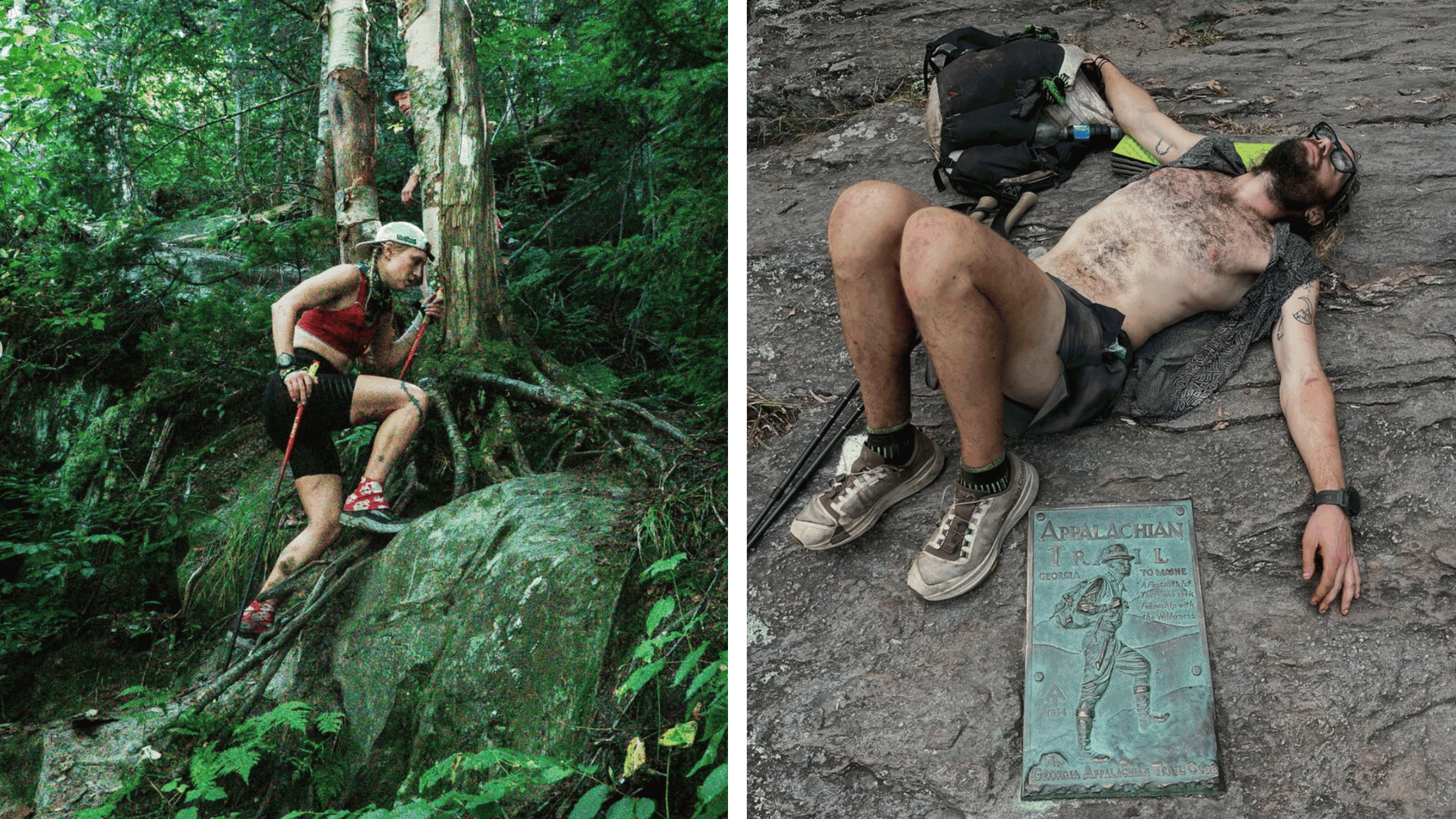
Women: Tara Dower, Long Trail
This August in Vermont, Tara Dower once again proved without a shadow of a doubt that she’s simply in a league of her own. The overall record holder on the Appalachian Trail covered the 272 miles of unrelenting rocky, rooty, steep terrain that makes up the Long Trail in just three days, 18 hours, and 30 minutes—that’s over 72 miles a day—to take down the hotly-contested overall FKT by just under three hours.
The accomplishment marks just one high in a year of peaks and valleys: Dower also DNFed the Western States 100 due to illness, DNFed the Mammoth 200, and won the Javelina 100-miler in a course-record time. But the through-line was that she remained unafraid to dream big and fail along the way.
ADVERTISEMENT
“The year started with the confidence that I got from the AT that I could push these limits,” Dower said on the FKT podcast. “I had sickness, I had lows, I had personal issues come up, just really tough life stuff…Once you get the first failure out of the way, it’s easy past there. Just fail once.”
Dower, supported by her trusted team (lovely bequeathed “the chump change crew”), took advantage of her raw speed and deliberately started off hot. “Will P was able to stay incredibly consistent through his attempt; that is not where my strengths lie,” Dower wrote in her FKT submission. “I knew I’d have to get ahead and work with the natural fade of my body and hope I had enough of a lead to keep it together.”
She also took a big risk with deep deprivation, sleeping for just three hours over nearly four days of running. Despite her brain screaming at her to stop and sleep by the end, she managed to stave off collapsing to the ground until the end.
ADVERTISEMENT
“Women should continue going after these overall FKTs,” she said on the FKT podcast. “It doesn’t have to be an overall FKT, just push your perceived limits…We are exceptional.”
Men: Jeff Garmire, Appalachian Trail
A broken trekking pole, a trashed resupply box, two left shoes—whatever obstacle you can think of, Jeff Garmire faced it on his self-supported effort on the Appalachian Trail. But he never gave up. He reached the northern terminus of the trail in 45 days, eight hours, and 37 minutes, besting Joe “Stringbean” McConaughy’s mark by four hours. That’s an average of 49 miles a day, carrying all of his supplies and gear on his back.
“After the broader reaches of a hurricane drenched me and all my gear, reality set in that this was going to be one of the most prolonged periods of suffering chasing a goal I wasn’t even sure I could achieve,” Garmire said.
“While the journey along the AT is usually social, mine was lonely,” he continued. “On a trail that is known for trail magic, I saw very little. But on the trail known to change lives, my second time thru hiking the iconic Appalachian Trail changed my life more than any other 45 day period in my life.”
ADVERTISEMENT
But arguably the hardest part, Garmire says, was arranging his life beforehand so he could spend a month and a half disconnected from “reality” without having to hit restart when he got home.
“Plenty of things went wrong, but the gift and ability to actually go after it, and to get that ability to problem-solve and push through all those things, showed me that all the work and things going into it, just make it worth it to have the opportunity to go do these things,” Garmire said on the FKT podcast. “It’s hard building up to something, whether it’s training or life or family or something. Those are just measures on how badly you want to go after what that goal is.”
Listen to the full FKT Podcast episode with Dower and Garmire.
